
Find a Contractor to Complete DIY Work in 2026
Hiring a skilled contractor to complete DIY work is the fastest way to protect your investment when a project moves beyond your comfort zone.

Hiring a skilled contractor to complete DIY work is the fastest way to protect your investment when a project moves beyond your comfort zone. The hybrid approach, where you handle low-skill tasks yourself and bring in licensed professionals for plumbing, electrical, and structural work, saves 25–35% compared to hiring a general contractor for everything. That translates to $12,000–$17,000 in savings on a typical $48,000 renovation. Knowing which tasks to hand off, where to find qualified help, and how to vet bids makes the difference between a project that finishes on time and one that drains your budget.
How to find a contractor to complete DIY work
The industry term for what most homeowners are describing is "partial scope contracting." You complete the prep work, demolition, or painting yourself, then bring in a licensed trade contractor for the regulated portions. This approach works because labor costs for professional contractors range from $30 to $125 per hour and represent 50–60% of total renovation costs. Reducing the hours a contractor bills you directly cuts your total spend.
The key is knowing exactly where your DIY work ends and where licensed work begins. Electrical panel upgrades, load-bearing wall removal, gas line work, and drain line rerouting all require permits and licensed tradespeople in every U.S. state. Attempting those tasks yourself does not just risk injury. Unlicensed work on structural, electrical, or plumbing issues can void your homeowner's insurance and trigger costly inspection failures.
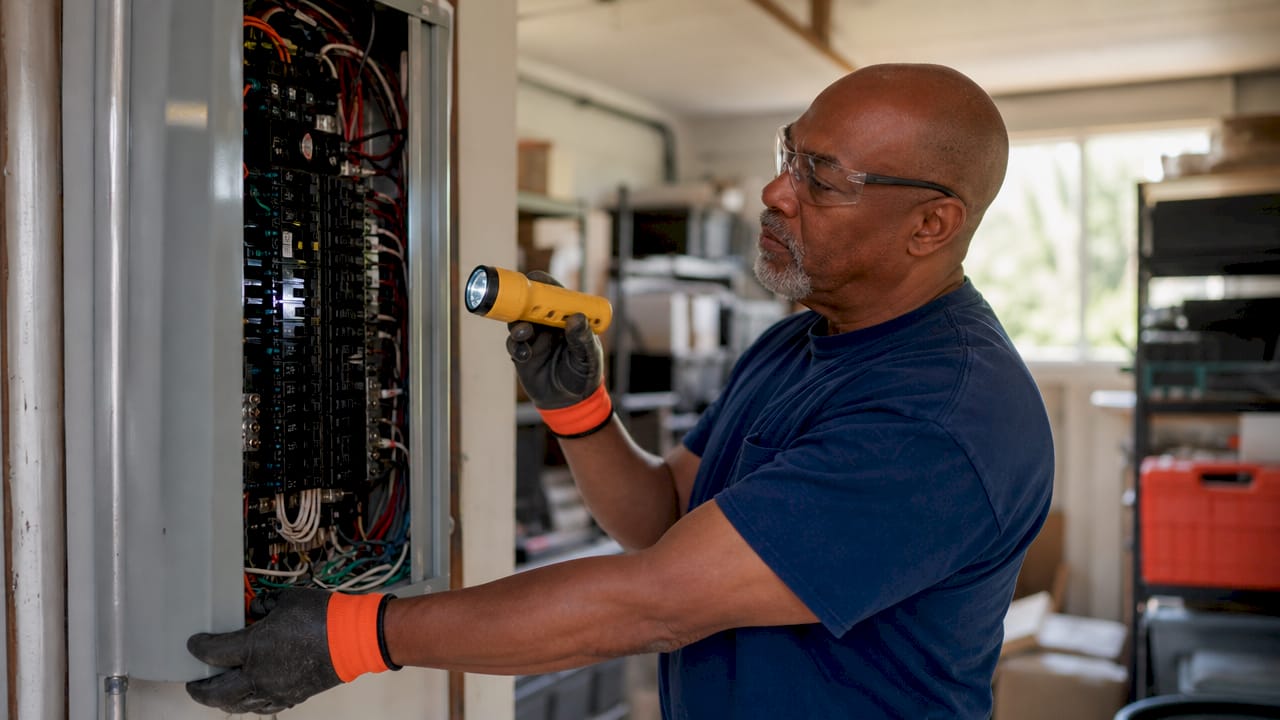
Pro Tip: Before you start any project, call your local building department and ask which tasks require a permit. That five-minute call tells you exactly where you need a licensed contractor.
Which tasks should you DIY and which need a pro?
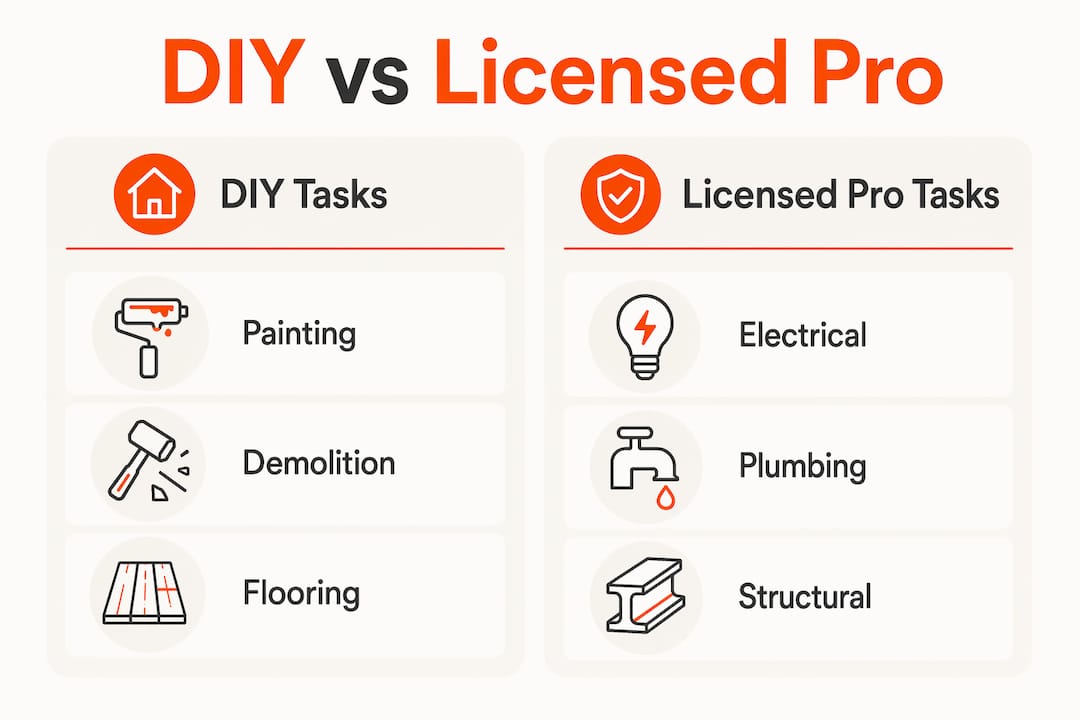
The clearest way to split a project is by risk and licensing requirements. Low-risk, high-labor tasks are ideal for DIY. High-risk or regulated tasks belong to licensed contractors.
Good candidates for DIY:
- Demolition of non-load-bearing walls
- Painting, priming, and surface prep
- Installing flooring over an existing subfloor
- Landscaping and exterior cleanup
- Cabinet removal and basic trim work
Tasks that require a licensed contractor:
- Electrical wiring, panel work, and outlet installation
- Plumbing rough-in, drain relocation, and gas lines
- Load-bearing wall removal or structural modifications
- HVAC installation and ductwork
- Roof replacement in jurisdictions requiring licensed roofers
| Task | DIY Suitable | Licensed Pro Required | Permit Typically Needed |
|---|---|---|---|
| Interior painting | Yes | No | No |
| Flooring installation | Yes | No | No |
| Tile work | Yes | No | No |
| Electrical wiring | No | Yes | Yes |
| Plumbing rough-in | No | Yes | Yes |
| Load-bearing wall removal | No | Yes | Yes |
| HVAC installation | No | Yes | Yes |
| Drywall hanging | Yes | No | No |
DIY work is scrutinized more intensely by inspectors, and inspection failures can add 4–8 weeks to your timeline. A licensed contractor's work typically passes inspection on the first visit. That speed advantage alone often justifies the cost for regulated tasks.
Pro Tip: Think of your time as a real cost. If you earn $50 an hour, a 40-hour DIY electrical job costs you $2,000 in lost time. A licensed electrician might finish the same work in 8 hours for $800 in labor. Hiring a pro is often the cheaper option once you account for your own hours.
Where to find qualified local contractors for your project
Reliable sources for finding local contractors fall into four categories: online marketplaces, trade referrals, licensing boards, and community networks.
Online marketplaces and AI-powered platforms connect you with verified, reviewed contractors in your area. Handy, for example, uses AI to match homeowners with vetted local professionals, generates instant price estimates, and only charges contractors when they are actually hired. That model removes the incentive for contractors to chase leads they cannot fulfill.
Local supply stores are an underused resource. Plumbing supply houses, electrical wholesalers, and tile showrooms refer licensed tradespeople to their retail customers regularly. These referrals carry weight because the supplier's reputation depends on the quality of who they recommend.
State licensing boards publish searchable databases of licensed contractors by trade and zip code. Checking a contractor's license status takes two minutes and confirms they carry the credentials your project legally requires.
Community referrals from neighbors, local Facebook groups, and real estate agents produce some of the most reliable leads. A contractor who has completed three kitchens on your street has already proven they can work in your area, pull local permits, and pass local inspections.
Contractor vetting checklist:
- Verify active license with your state licensing board
- Confirm general liability insurance and workers' compensation coverage
- Check for a physical business address, not just a phone number
- Read reviews on at least two independent platforms
- Ask for references from projects completed in the past 12 months
- Confirm they have experience with your specific project type
Red flags for unreliable contractors include pressure to decide immediately, cash-only payment demands, and no verifiable business address. Walk away from any contractor who checks those boxes.
How to evaluate and compare contractor bids
Getting at least three written bids is the standard practice for any project over $1,000. Three bids give you a realistic price range and reveal whether any single contractor is significantly over or under the market rate.
A complete bid breaks down into four components: labor, materials, permits, and a contingency allowance. Any bid that lumps everything into a single number is incomplete. You cannot compare two bids fairly unless you know what each contractor is charging for labor versus materials.
Bid comparison checklist:
- Confirm the bid is written, not verbal
- Check that labor and materials are listed separately
- Verify that permit costs are included or explicitly excluded
- Look for a contingency line (typically 10–15% of project cost)
- Confirm the project start date and estimated completion date
- Check payment schedule: avoid any contractor requesting more than 10–15% upfront
- Verify that the bid covers the exact same scope of work across all three contractors
Pro Tip: When comparing bids, create a simple spreadsheet with each contractor's name, labor cost, materials cost, permit cost, and timeline. Sorting by total cost alone misses the detail that matters most.
Qualified general contractors manage permits, subcontractors, materials, and inspections as part of their service. If your project involves multiple trades, a general contractor's coordination fee often costs less than the delays and conflicts you absorb managing five specialty contractors yourself.
A large upfront cash payment request is the clearest financial red flag. Reputable contractors typically request 10–15% at signing, progress payments tied to milestones, and a final payment upon completion and inspection.
How to formalize agreements with your contractor
A written contract is the single most important document in any contractor relationship. Verbal agreements are unenforceable in most states and leave both parties exposed when disputes arise.
Contract essentials:
- Full scope of work, described in specific detail
- Payment schedule tied to project milestones, not calendar dates
- Start date and projected completion date with penalty clauses for delays
- Materials list with brand, model, and grade specifications
- Permit responsibility: who pulls permits and who pays for them
- Change order procedure: all changes must be written and signed before work begins
- Warranty terms for both labor and materials
- Dispute resolution process
Permit responsibility deserves special attention. Licensed contractors are generally required to manage permitting, and a contractor who asks you to pull your own permits may be unlicensed or trying to avoid accountability. Confirm permit handling in writing before signing.
Verify references before you sign anything. Call two or three past clients and ask three specific questions: Did the contractor finish on time? Did the final cost match the bid? Would you hire them again? Those three answers tell you more than any online review.
Managing multiple specialty contractors creates a coordination burden that homeowners consistently underestimate. A typical renovation involves 5–7 specialty contractors who need scheduling around each other. That coordination falls on you unless you hire a general contractor to manage it.
Key Takeaways
The most reliable way to complete a hybrid DIY project on budget is to hire licensed contractors for regulated work, get three written bids, and formalize every agreement in a detailed written contract.
| Point | Details |
|---|---|
| Use the hybrid approach | Handle painting and demolition yourself; hire licensed pros for electrical, plumbing, and structural work. |
| Verify licenses and insurance | Check your state licensing board and confirm liability coverage before any contractor starts work. |
| Get three written bids | Compare labor, materials, permits, and timelines separately to make a fair cost comparison. |
| Require a written contract | Include scope, payment milestones, permit responsibility, and a change order process before signing. |
| Watch for red flags | Cash-only demands, no physical address, and pressure tactics are signs of an unreliable contractor. |
What I've learned from watching homeowners manage contractors
By Yana
The most common mistake I see is homeowners treating contractor hiring as a one-time transaction instead of a working relationship. You are not just buying a service. You are entering a short-term partnership where communication quality determines the outcome as much as the contractor's technical skill.
The coordination problem is real and consistently underestimated. Renovations typically involve 5–7 specialty contractors who need to work in sequence. When the electrician runs late, the drywall crew sits idle, and you pay for both. Homeowners who manage this themselves often spend more in delays than they saved by skipping a general contractor.
My honest observation: the homeowners who get the best results are the ones who over-communicate in writing. They send recap emails after every phone call, document every change, and never approve verbal modifications to scope. That habit protects them when disputes arise and keeps contractors accountable to the original agreement.
One more thing worth saying plainly: do not let cost pressure push you into hiring an unlicensed contractor for regulated work. The short-term savings disappear the moment an inspector flags the work, your insurance denies a claim, or you try to sell the house and a buyer's inspector finds unpermitted electrical. Licensed work costs more upfront. It costs far less over time.
— Yana
Finding trusted contractors is easier with Handy
Searching for a reliable contractor on your own takes time you may not have. Handy connects homeowners with verified local contractors through an AI-powered marketplace that generates instant price estimates based on your project details.

You describe the job, upload a photo if you have one, and Handy matches you with licensed professionals who have real reviews and verified portfolios. Unlike traditional lead-generation sites, Handy only charges contractors when they are hired, so the pros you see are genuinely interested in your project. Find local contractors through Handy and get written estimates without the back-and-forth that slows most hiring decisions down. You can also check the Handy pricing guide to understand typical labor rates before your first conversation with a contractor.
FAQ
What tasks can I safely DIY before hiring a contractor?
Painting, demolition of non-load-bearing walls, flooring installation, and basic landscaping are low-risk tasks well-suited for DIY. Leave electrical, plumbing, structural, and HVAC work to licensed contractors.
How many bids should I get from contractors?
Get at least three written bids for any project over $1,000. Three bids give you a realistic price range and help you spot outliers on either end.
What should a contractor contract include?
A solid contract covers the full scope of work, a milestone-based payment schedule, start and completion dates, materials specifications, permit responsibility, and a written change order process.
How do I verify a contractor's license?
Search your state's contractor licensing board website using the contractor's name or license number. Most state boards offer a free public search that confirms license status and any disciplinary history.
What are the biggest red flags when hiring a contractor?
Pressure to decide immediately, cash-only payment demands, and no verifiable physical business address are the clearest warning signs. Walk away from any contractor who cannot provide proof of license and insurance.
Get an instant price with Handy
Snap a photo or describe the job — our AI writes the brief and gives you a fair price range in seconds. Verified Texas pros bid, and you only pay when you hire.
Try Handy free →